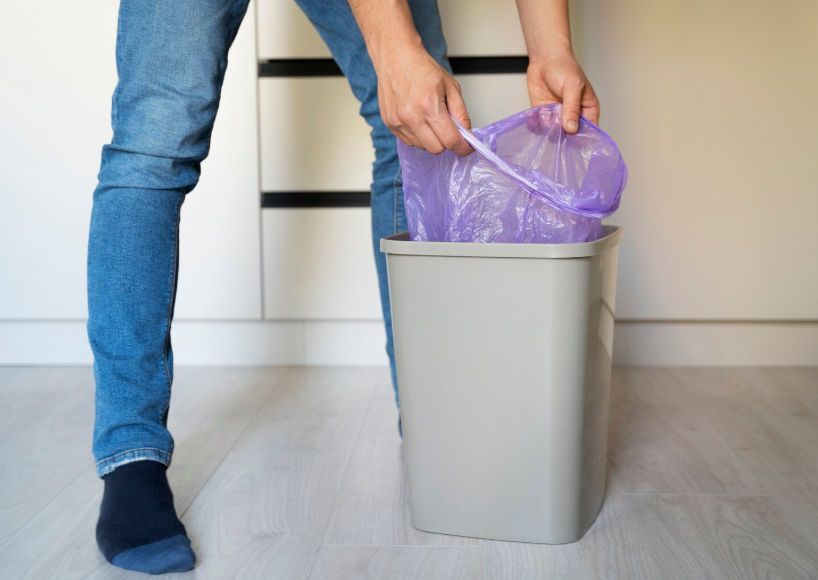
The reason why putting a trash bag under a liner works is that it prepares you to handle predictable messes rather than react to them. The bathroom is a high-use, moisture-heavy space, and a little foresight goes a long way.
Bathroom messes often feel harder to manage than they should. The space is small, the trash is light, and yet spills, leaks, and mysterious residue somehow appear anyway. One simple habit can prevent most of that frustration: placing a spare trash bag in the bottom of your bathroom bin. It takes seconds, costs nothing extra, and quietly solves several common problems before they start.
The Hidden Messes That Happen in Bathroom Bins
Bathroom trash isn’t heavy, but it’s sneaky. Cotton pads, floss, tissues, wipes, and packaging often carry moisture, residue, or product oils. Even when everything looks dry, humidity builds up inside the bin over time.
When a liner tears or slips, that moisture transfers directly to the bin itself. Suddenly, what should be a quick trash change turns into scrubbing dried-on grime from plastic corners. The mess feels disproportionate to what you threw away.
These issues aren’t rare accidents. They’re normal outcomes of how bathroom trash is used. The spare bag trick acknowledges that reality and plans for it.
See The Kitchen Cleaning Tool Most People Forget to Replace for another hygiene upgrade.
Why a Backup Bag Changes Everything
Keeping a spare trash bag at the bottom of the bin creates an instant reset option. When you remove a full bag, there’s no delay, no rummaging under the sink, and no moment where trash piles up because you forgot to restock.
This matters more than it sounds. Small interruptions are where habits break down. If replacing the liner requires extra steps, people put it off. That’s how loose trash ends up in bins “just for now.”
With a spare already in place, the transition is seamless. Old bag out, new bag in, done. No friction, no excuses.
Check The Right Way to Store Leftovers So They Last Longer for another low-effort prevention habit.
It Also Protects the Bin Itself
The backup bag does more than save time. It acts as a secondary barrier between leaks and the bin. If a liner tears or something drips, the spare bag catches it before it reaches the plastic.
That means fewer deep cleans and less odor buildup over time. Plastic bins hold smells longer than most people realize, especially in warm, humid rooms. Preventing direct contact keeps the bin fresher with less effort.
Over time, this also extends the bin’s life. Cracks, stains, and lingering smells are what usually force replacements, not structural damage.
How This Fits Into Smarter Cleaning Habits
This trick works best when paired with other small, preventative habits. The theme is the same: reduce the chance of mess by cleaning up after it happens.
For example, using liners consistently instead of tossing items directly into the bin prevents residue buildup. Taking trash out before it’s overfilled reduces tearing. Choosing the right liner size prevents slipping and bunching.
Each of these steps is minor on its own, but together they turn bathroom maintenance into something you barely think about. The spare bag is the simplest of these habits, which is why it’s so effective.
Explore How to Make Your Home Feel Cleaner Without Deep Cleaning for more preventative habits.
Why Tiny Setup Changes Matter More Than Big Cleanups
People often look for cleaning motivation when what they really need is a better setup. Systems beat willpower every time. When the environment makes the right action easy, it happens automatically.
The spare trash bag works because it removes a decision. You don’t have to remember to grab a new liner or decide whether now is the time to replace it. The default is already there.
This is how many effective home habits work. They don’t rely on discipline. They rely on preparation.
Read The Laundry Mistake That Makes Towels Stiff (And How to Fix It) for another moisture-related cleanup fix.
Making This Habit Stick Effortlessly
To make this routine automatic, store bathroom trash bags folded flat and drop one in the bin every time you replace a liner. Don’t overthink it. One spare is enough.
If you want to go a step further, keep a small stack under the sink so restocking takes seconds. The goal isn’t bulk storage. It’s continuity.
Once you get used to this setup, you’ll notice how odd it feels when a bin doesn’t have a backup ready. That’s when you know the habit has locked in.