A few minor adjustments make leftovers safer and far more appealing to eat later.
Leftovers don’t go bad as quickly as many people think they do; they’re usually ruined by how they’re stored. Food that dries out, absorbs odors, or spoils early often does so because of exposure to air, moisture imbalance, or temperature issues.
Learning how to store leftovers properly extends freshness, preserves texture, and reduces food waste without changing what you cook.
Why Leftovers Spoil Faster Than Expected
Spoilage is driven by bacterial growth and oxidation. Both are accelerated when food is exposed to air or stored at inconsistent temperatures.
Leaving food uncovered, cooling it too slowly, or storing it in oversized containers can cause moisture loss and early bacterial growth. Even a few hours of improper handling can significantly shorten shelf life.
Most leftover problems start before the food ever reaches the fridge.
See The Grocery List Method That Reduces Food Waste for smarter meal planning strategies.
Cooling Food Properly Before Storage
Hot food shouldn’t be sealed and placed directly into the refrigerator. Trapped steam creates condensation, which promotes bacterial growth and sogginess.
Instead, allow the food to cool slightly, uncovered, before sealing. Large portions should be divided into smaller containers to cool evenly and quickly.
This step reduces temperature danger zones and preserves texture.
Choosing the Right Containers Matters
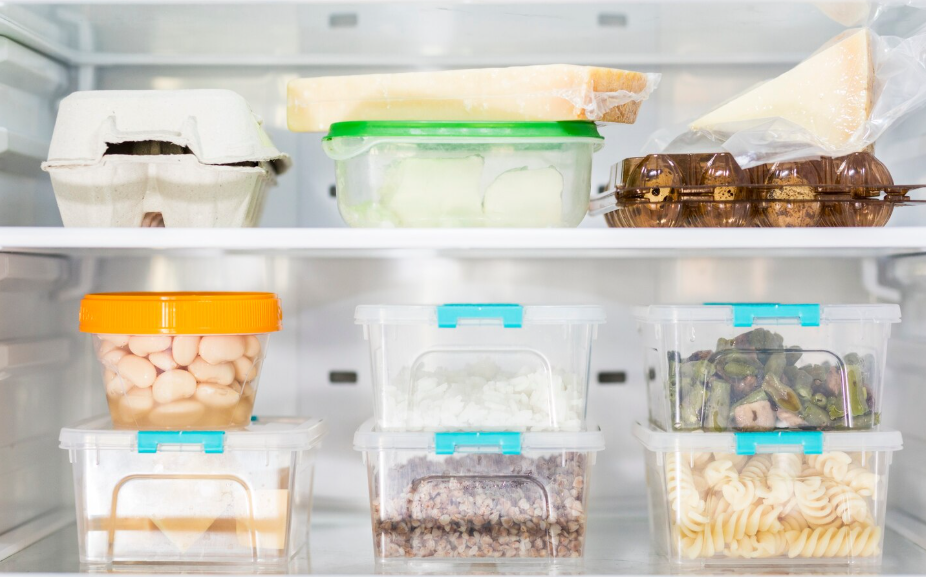
Airtight containers are essential. They limit oxygen exposure and prevent cross-contamination with other foods.
Glass or rigid plastic containers with tight-fitting lids work best. Avoid flimsy lids that warp or leak air over time.
Containers should match portion size closely. Too much space means more air, which accelerates spoilage.
Check out How to Spot Shrinkflation Before You Buy to avoid hidden food cost losses.
Why Labeling and Dating Saves Food
Many leftovers get thrown out because people don’t remember when they were made. Uncertainty leads to waste.
Labeling containers with the date removes guesswork. You know what’s still safe and what should be eaten first.
This simple habit prevents perfectly good food from being discarded unnecessarily.
Placement Inside the Refrigerator Matters
Not all fridge zones are equal. The back of the fridge is colder and more consistent than the door.
Store leftovers on middle or upper shelves toward the back, not in the door where temperature fluctuates.
Consistent cold slows bacterial growth and extends freshness.
Explore The ‘Cost Per Use’ Trick That Changes How You Shop to maximize food value.
Foods That Benefit From Separate Storage
Some meals store better when components are separated. Sauces, grains, and proteins often reheat better when stored apart.
Separating prevents sogginess and allows each component to maintain its texture.
This approach also lets you reheat only what you need.
Freezing Leftovers the Right Way
Freezing extends life dramatically, but only if done correctly. Freeze food as fresh as possible, not after it’s been sitting for days.
Use freezer-safe containers and remove as much air as possible. Label with contents and date.
Flat, thin portions freeze faster and thaw more evenly.
Reheating Without Ruining Texture
Reheating gently preserves quality. High heat dries food and creates uneven temperatures.
Use lower power settings when possible and cover food to retain moisture. Stir or rotate during reheating for even warmth.
Proper reheating keeps leftovers enjoyable instead of disappointing.
Read The One-Touch Rule That Instantly Cuts Down on Clutter for another simple efficiency habit.
How This Reduces Food Waste Long-Term
When leftovers stay appealing, you’re more likely to eat them. That alone reduces waste significantly.
Better storage also builds trust. You stop second-guessing safety and freshness.
Over time, this habit saves money and makes cooking feel more efficient instead of wasteful.